Shelving provides both functional storage and prime decorative opportunity in UK homes. This guide offers practical approaches to shelf styling across different spaces, with ideas suitable for various budgets and aesthetic preferences.
Living Room Shelf Styling
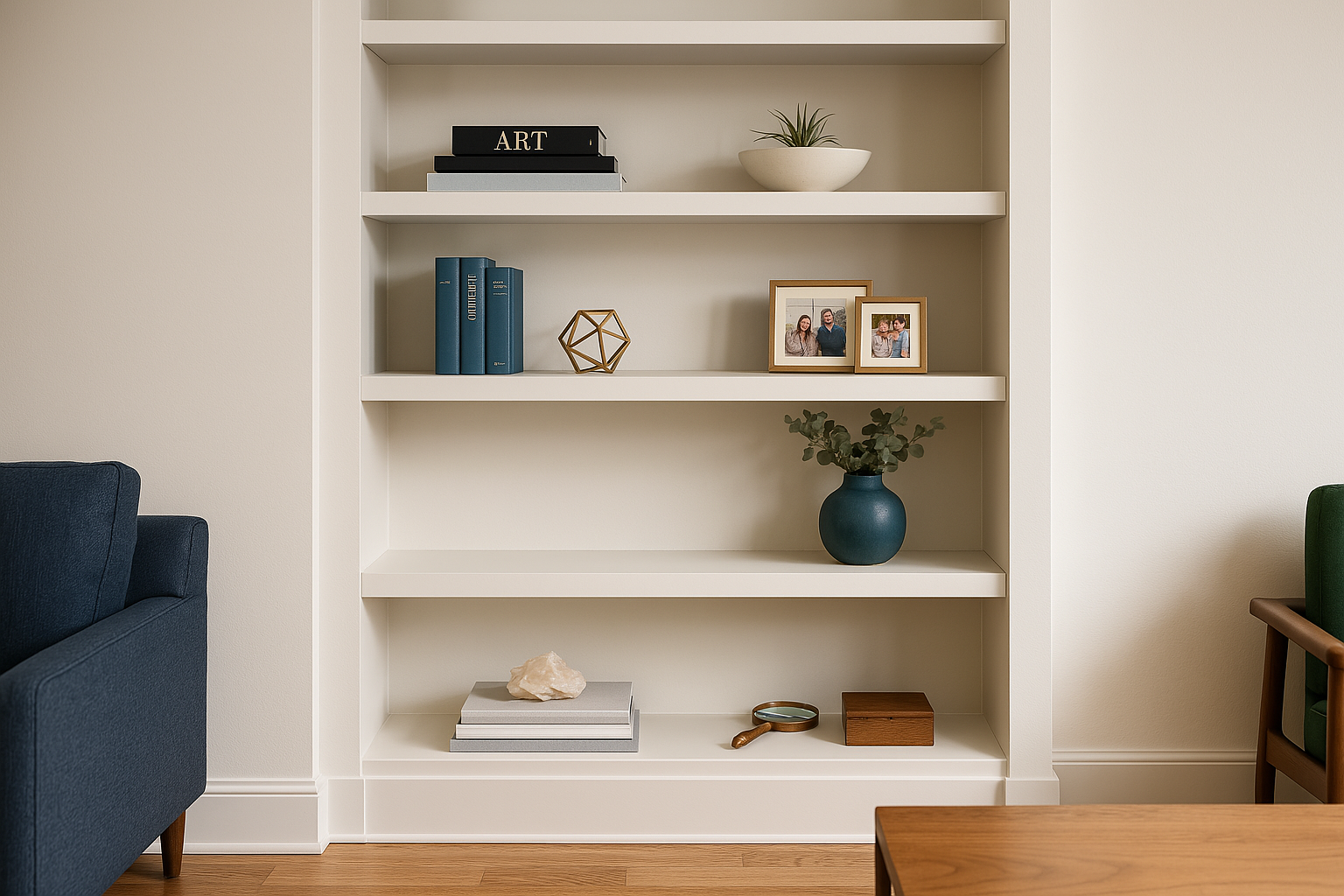
The living room often features the most visible shelving in the house, whether built-in alcove units or floating shelves. Create impact through deliberate arrangement rather than overcrowding.
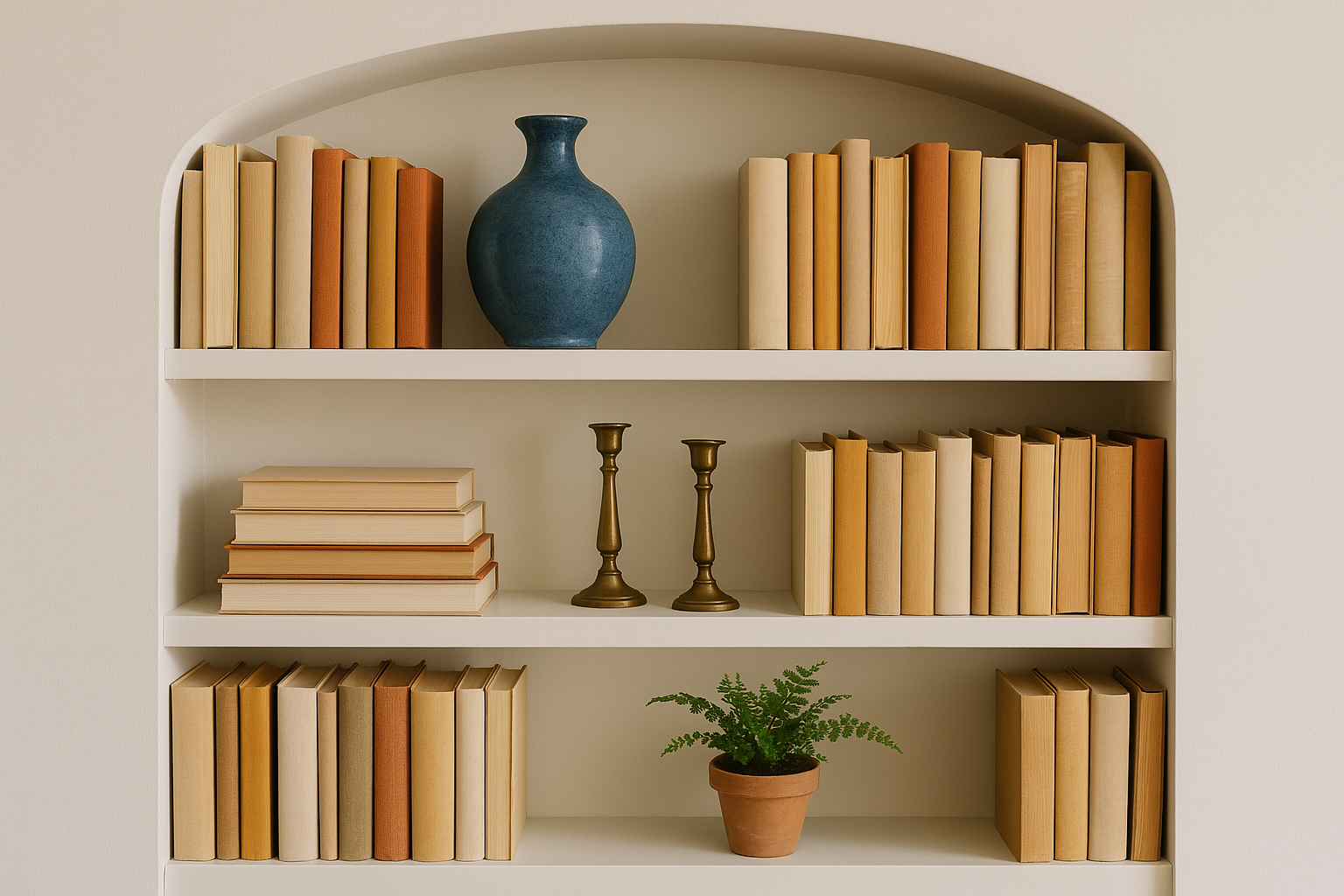
Arrange books in both vertical and horizontal stacks, using the horizontal groups as platforms for smaller objects. Group objects in odd numbers and vary heights to create visual rhythm. Leave at least 20% of shelf space empty to allow the eye to rest.
Kitchen Open Shelving
Kitchen shelves balance practicality with visual appeal. Arrange daily-use items within easy reach while creating an intentional display.
Stack white plates and bowls in neat piles and group clear glasses together. Introduce colour through items like blue pasta jars, olive oil bottles in green glass, or cookbooks. For visual coherence, limit your palette to 2-3 colours maximum, using white ceramics as a foundation.
Bathroom Shelf Arrangement
Bathroom shelving must harmonize function with aesthetics in typically small spaces. Create a spa-like effect through deliberate containment and material consistency.
Store everyday toiletries in amber glass bottles with pump dispensers for soap and moisturizer, and white ceramic jars for cotton pads. Include a small trailing pothos plant and position a simple framed black and white botanical print at the back of one shelf.
Bedroom Reading Nook
Bedside or reading nook shelves should prioritize function while maintaining calm. Avoid overcrowding in this restful space.
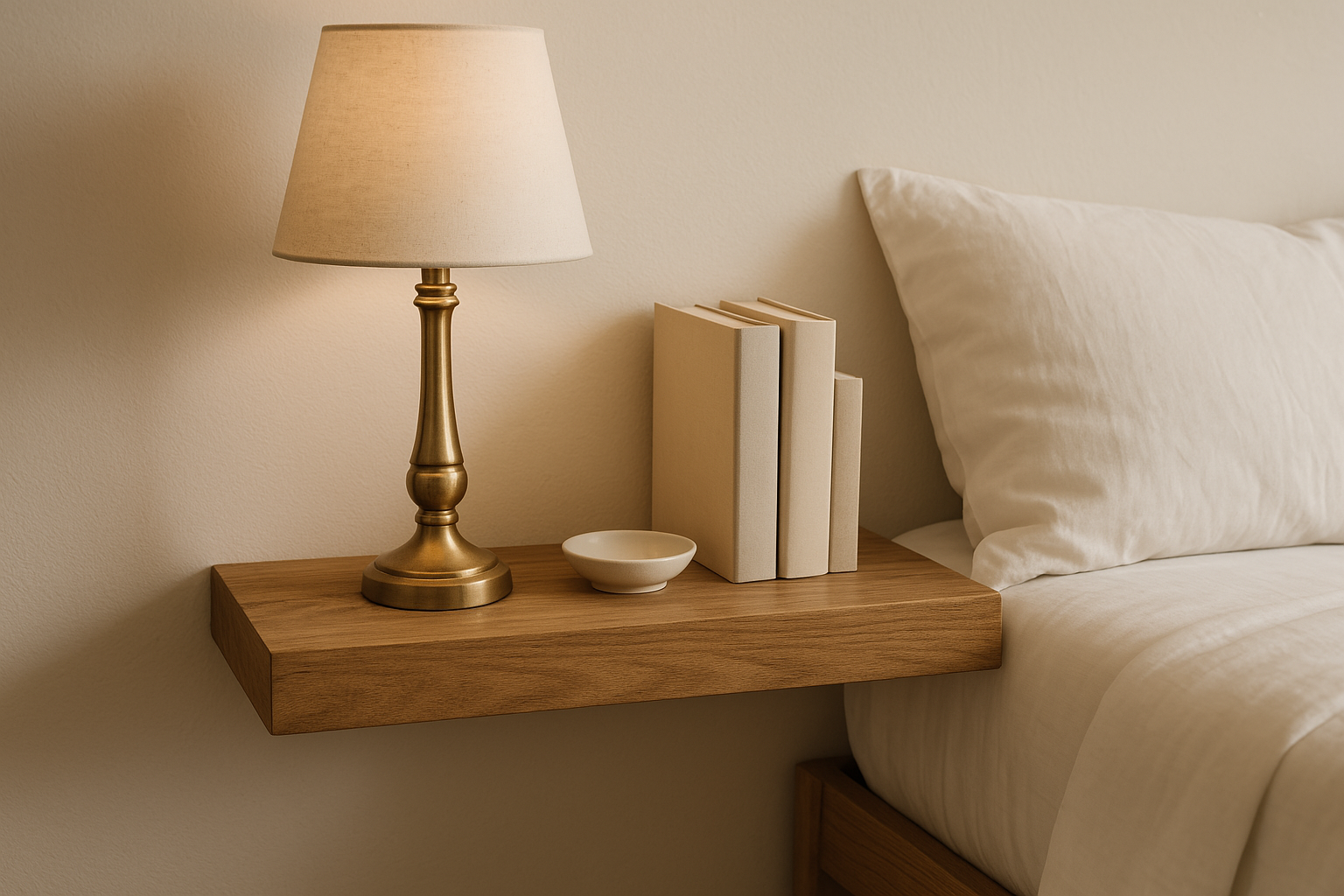
Limit a bedside shelf to essential items: two or three books with neutral spines, a small white ceramic dish for jewelry, and a brass table lamp with a beige shade. For dedicated reading nooks, arrange books with spines at similar heights for visual calm.
Home Office Shelf Organization
Office shelving should balance practical storage with motivational elements. Create a system that supports productivity rather than distraction.
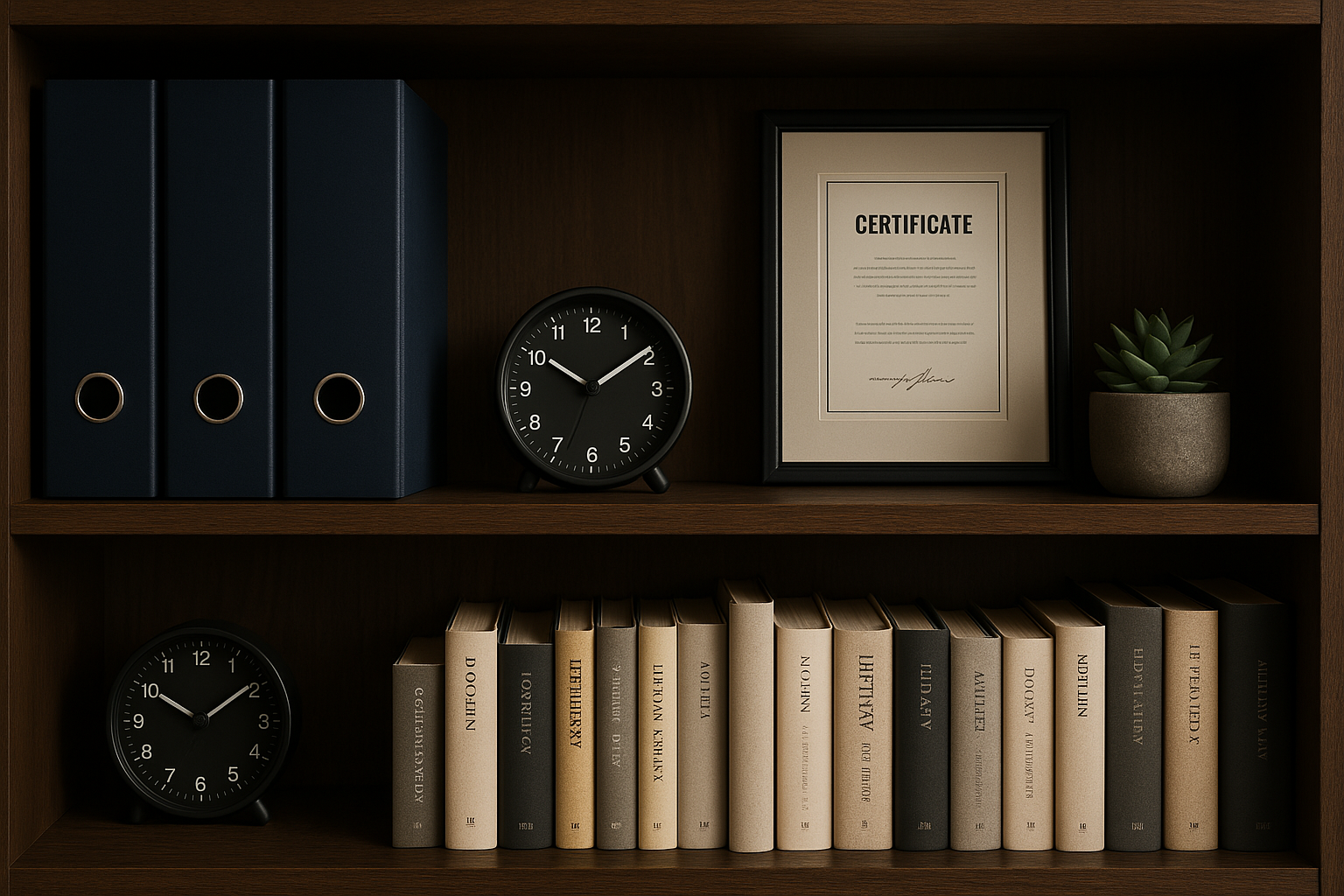
Use matching navy box files for document storage. Position these at regular intervals across shelves, interspersed with reference books arranged by height. Include a framed certificate or diploma, a small desk clock, and a potted succulent in a simple grey pot.
Floating Shelf Composition
Floating shelves make particular visual impact due to their clean, architectural lines. Their styling should respect this minimalist quality.
For a single floating shelf, create an asymmetrical arrangement anchored by one larger object (a white ceramic vase) positioned off-centre. Balance this with a stack of three hardcover books, a small brass sculpture, and a simple picture frame, all with intentional spacing between pieces.
Corner Shelf Utilization
Corner shelves transform awkward spaces into functional display areas. Their triangular format requires specific styling approaches.
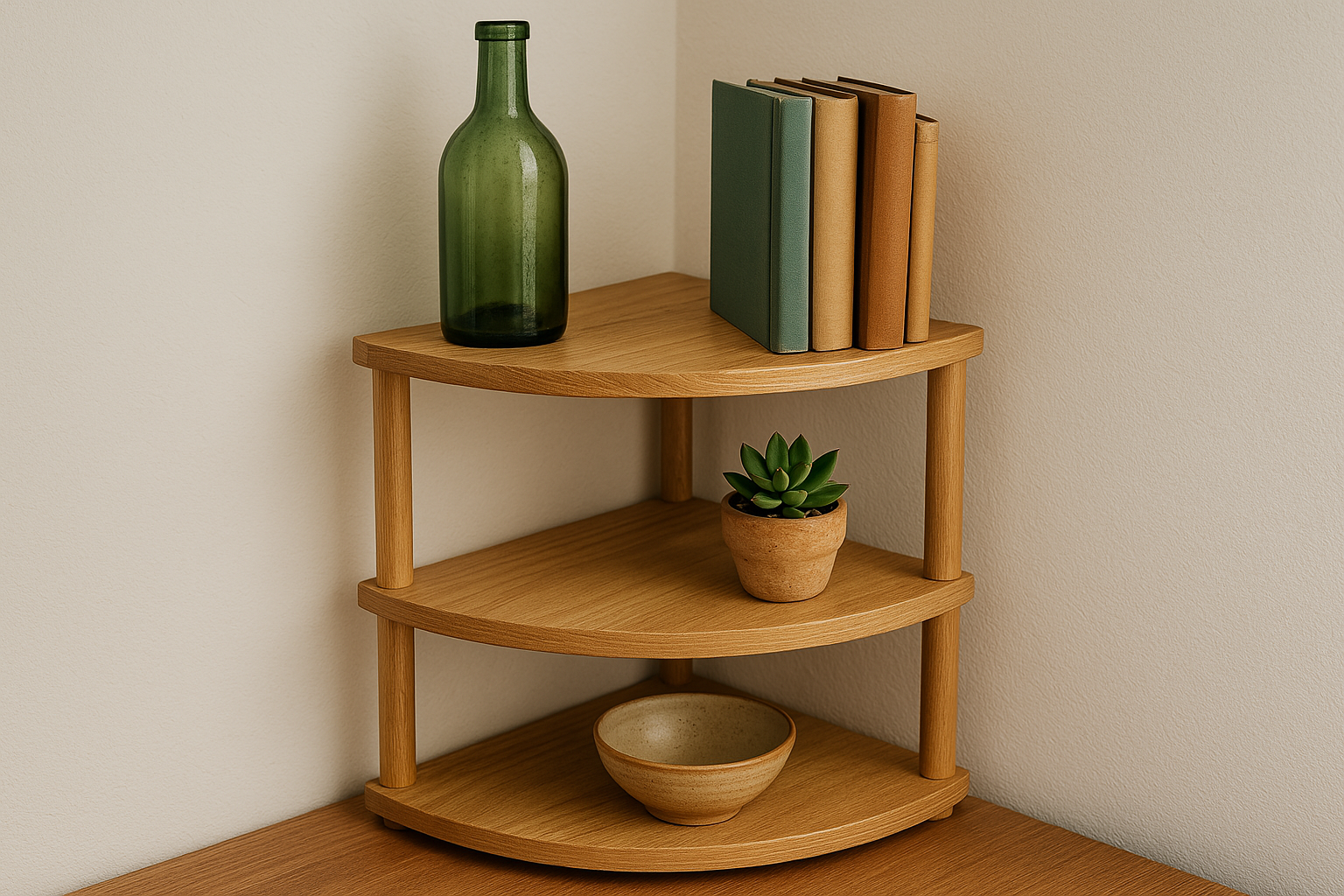
Position taller items at the back corner point, with height descending as items move forward. Place a tall green glass bottle at the back corner, hardcover books along one edge, and a small potted succulent along the other side, creating balanced asymmetry.
Nursery and Children’s Room Shelves
Children’s room shelving should combine practical storage with display that sparks imagination. Safety must remain the primary consideration.
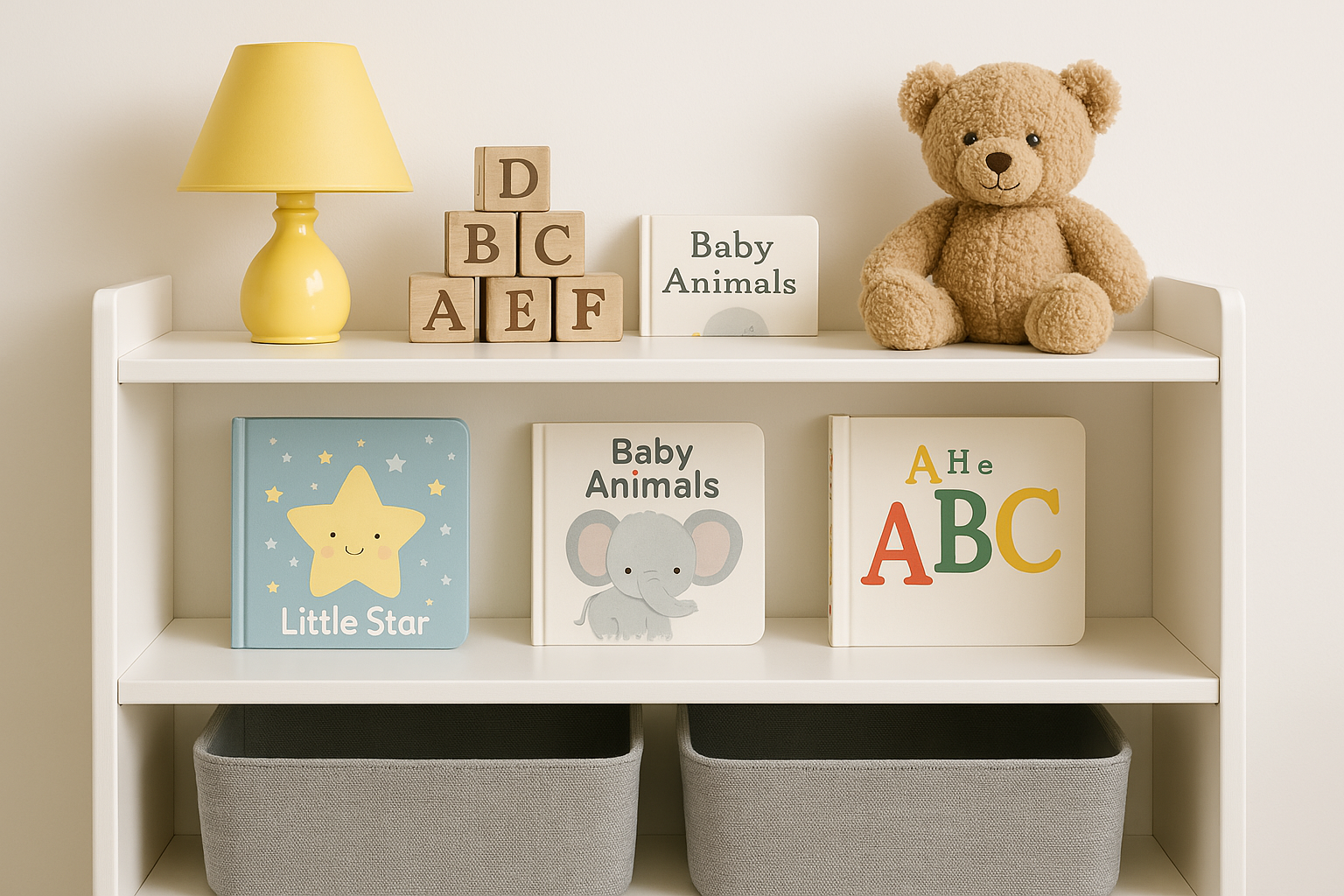
Position grey fabric storage baskets on lower shelves containing toys. Reserve upper shelves for display items – a wooden alphabet block set, a small stuffed animal, and three picture books with covers facing forward. Include a child-safe table lamp with a warm yellow shade.
Bookshelf Arrangement Beyond Books
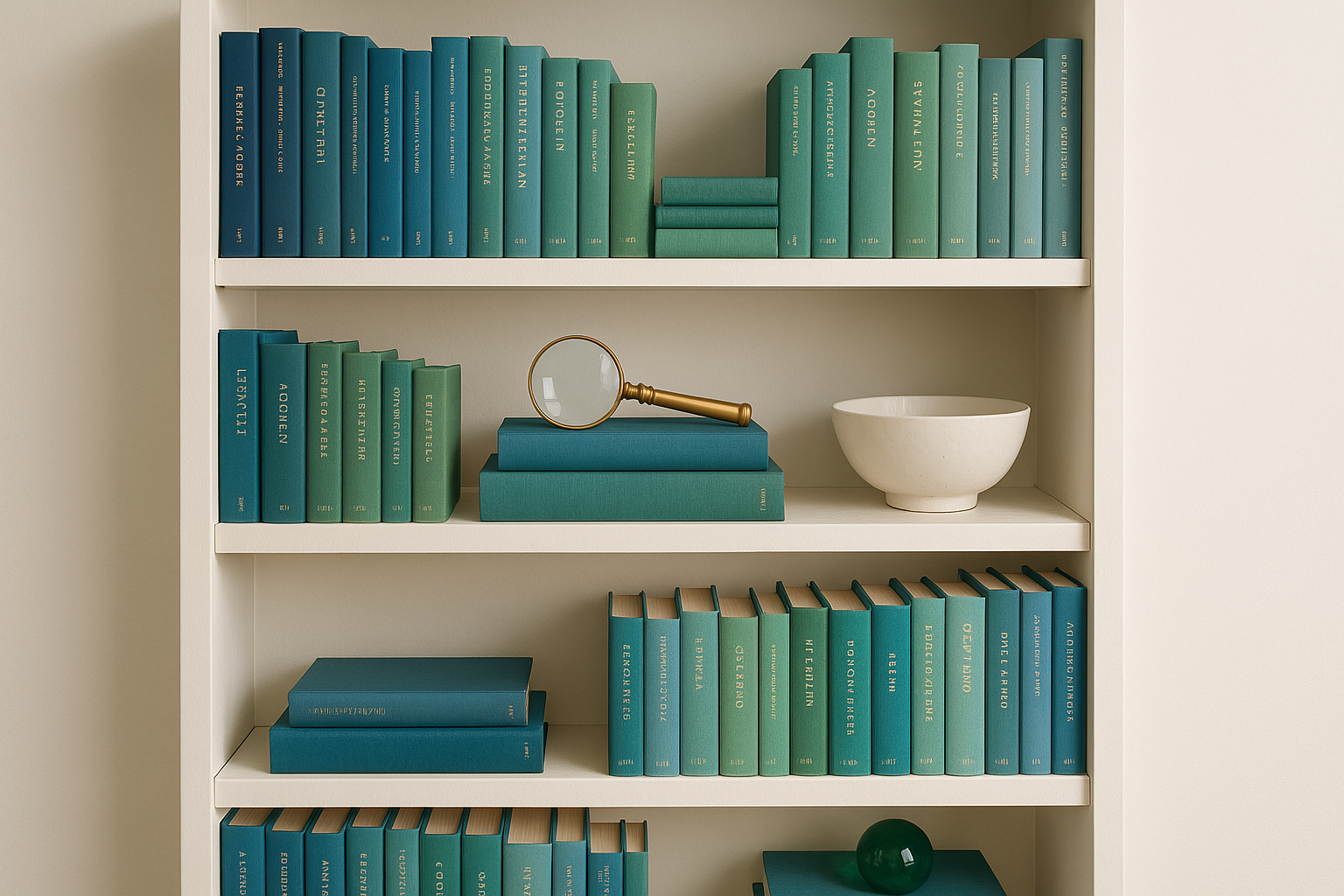
Bookshelves need not contain only books. Create visual rhythm by alternating between vertical book stacks, horizontal groupings, and decorative objects.
Arrange books with blue and green spines grouped together in vertical stacks. Place horizontal stacks of three to four books as platforms for a small white ceramic bowl, a brass magnifying glass, and a green glass paperweight. Leave some empty space between groupings.
Decorative Shelf Brackets
Distinctive brackets transform basic shelving into architectural features. Select brackets that complement your interior style while providing proper support.
Install black cast iron scrollwork brackets supporting a wooden shelf painted white. For contemporary spaces, use brass or black powder-coated steel brackets with clean geometric lines supporting natural oak shelving.

Kitchen Herb Shelf
A dedicated herb shelf near the kitchen window combines practicality with living decor. Create a functional display that enhances cooking while adding natural elements.
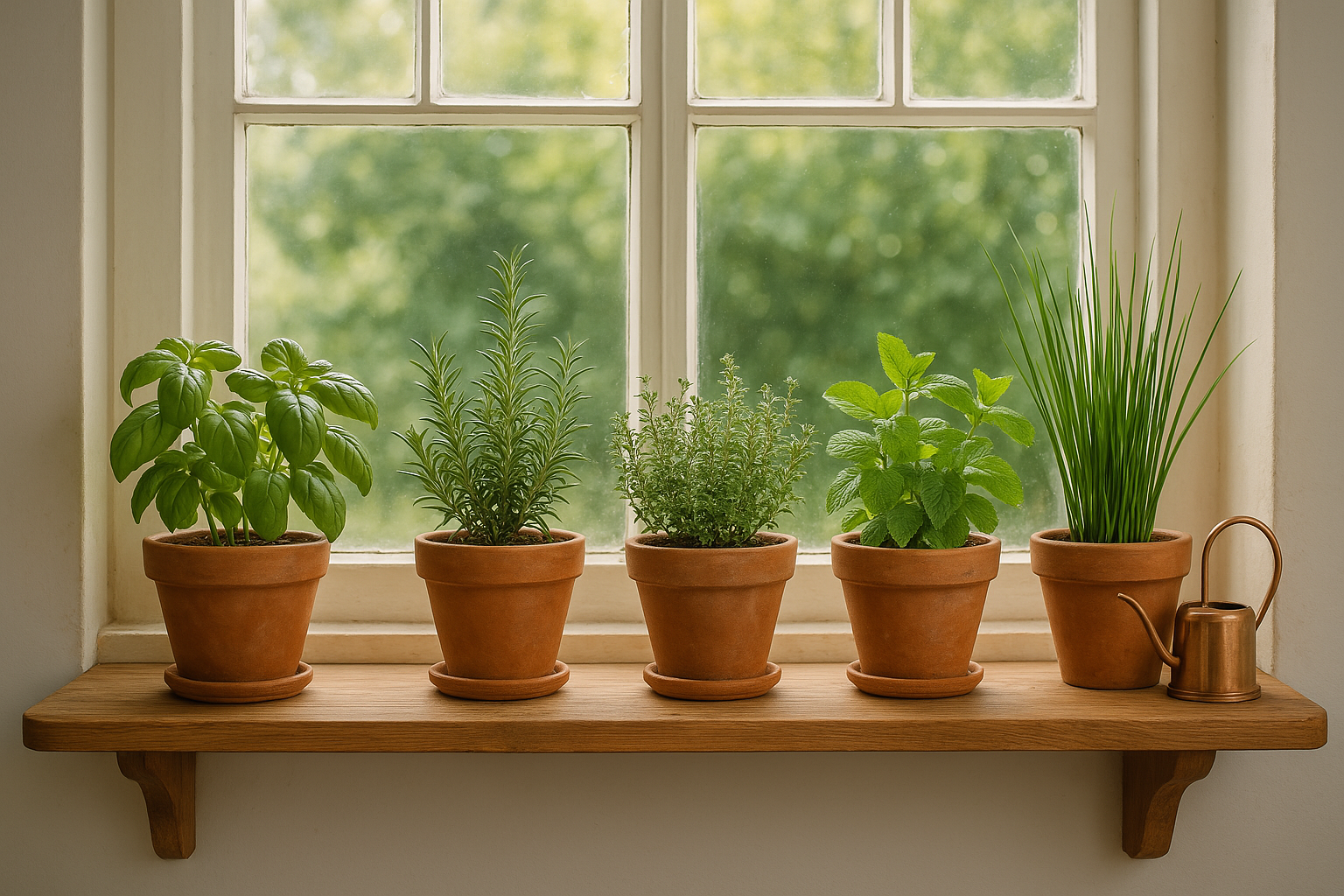
Use matching terracotta pots filled with basil, rosemary, thyme, mint, and chives. Position in a single row on a wooden shelf with slight height variation. Include one small copper watering can as a practical decorative element.
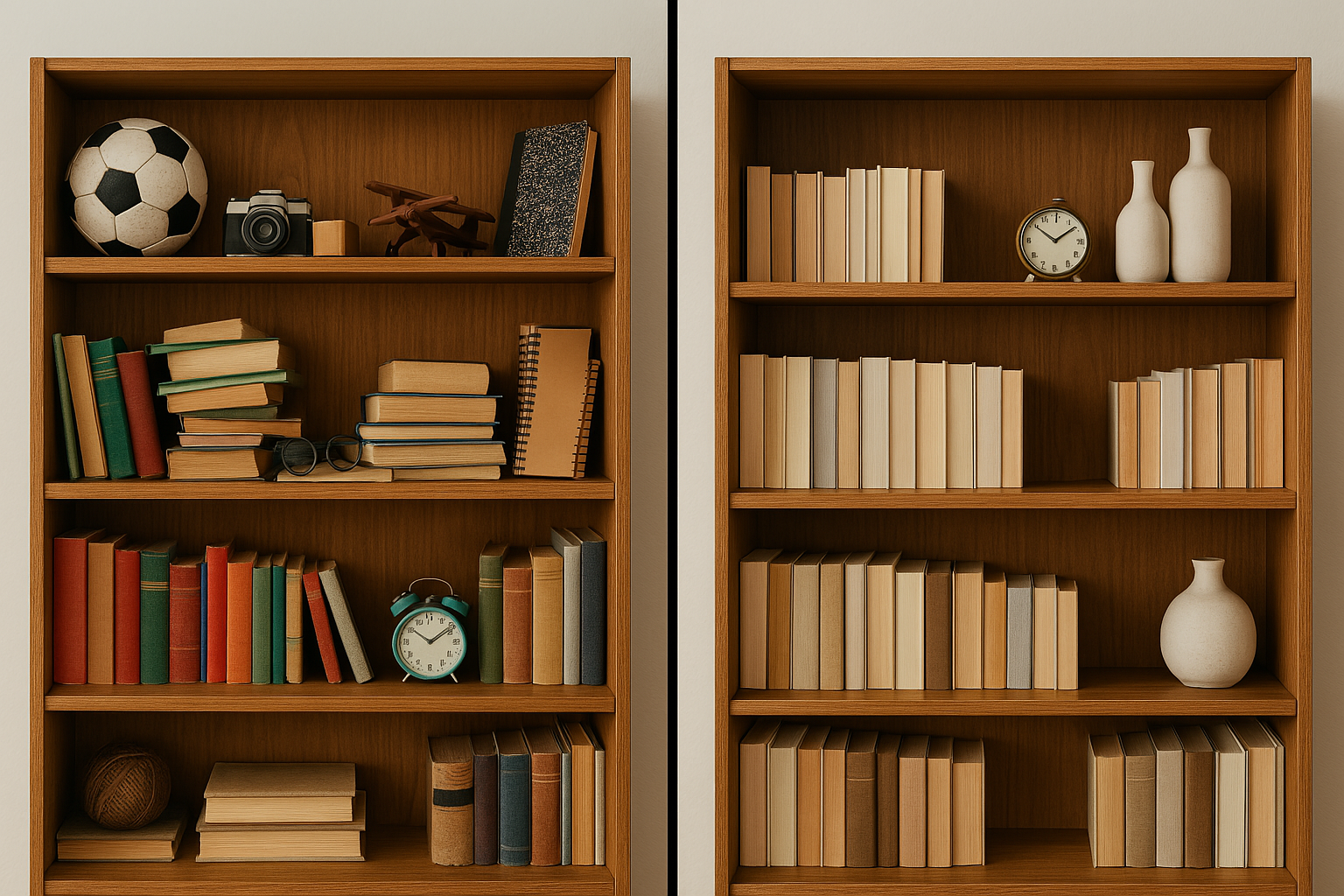
Shelf Styling Before and After
Transform cluttered, ineffective shelving into purposeful displays through editing and reorganization.
Before: Overcrowded shelf with mismatched items, no visual spacing, and no clear organization pattern. After: The same shelf with books organized by size, three ceramic vessels of varying heights, a small brass clock, and proper spacing between all elements.

Practical Styling Tips
When implementing these shelf decor ideas, consider these practical guidelines:
- Weight distribution: Position heavier items toward the ends of shelves where support is strongest
- Depth management: Place taller items toward the back, shorter items at the front for visibility
- Scale appropriateness: Select objects sized proportionally to your shelf depth (items should occupy 50-70% of shelf depth)
- Visual spacing: Maintain at least 3cm between objects to prevent crowded appearance
- Material mix: Combine different textures (glass, ceramic, wood, metal, textile) for visual interest
- Lighting consideration: Position special items where natural or installed lighting will highlight them
- Regular editing: Remove items that no longer serve purpose or bring joy; shelves should evolve with your needs
Consider the viewing angle – shelves above eye level should have taller items at the back, while shelves below eye level can feature taller items at the front since they’ll be viewed from above.
Conclusion
Effective shelf styling balances function with deliberate aesthetics. The most successful shelf arrangements maintain breathing room around objects, mix textures thoughtfully, and evolve over time rather than remaining static displays.
Focus on quality over quantity, selecting items with genuine meaning or purpose rather than generic decorative pieces. This approach creates shelving that feels authentic to your home while maintaining sophisticated visual interest.
Regularly reassess and edit your shelf arrangements, adjusting with seasons or as new items enter your home. This ongoing curation prevents displays from becoming stagnant or overcrowded, ensuring your shelves remain both practical and visually appealing.