Categories
Décor Upgrades

Window Sill Decor

Window sills provide useful display space in most homes. This guide covers practical styling approaches for these often overlooked areas.
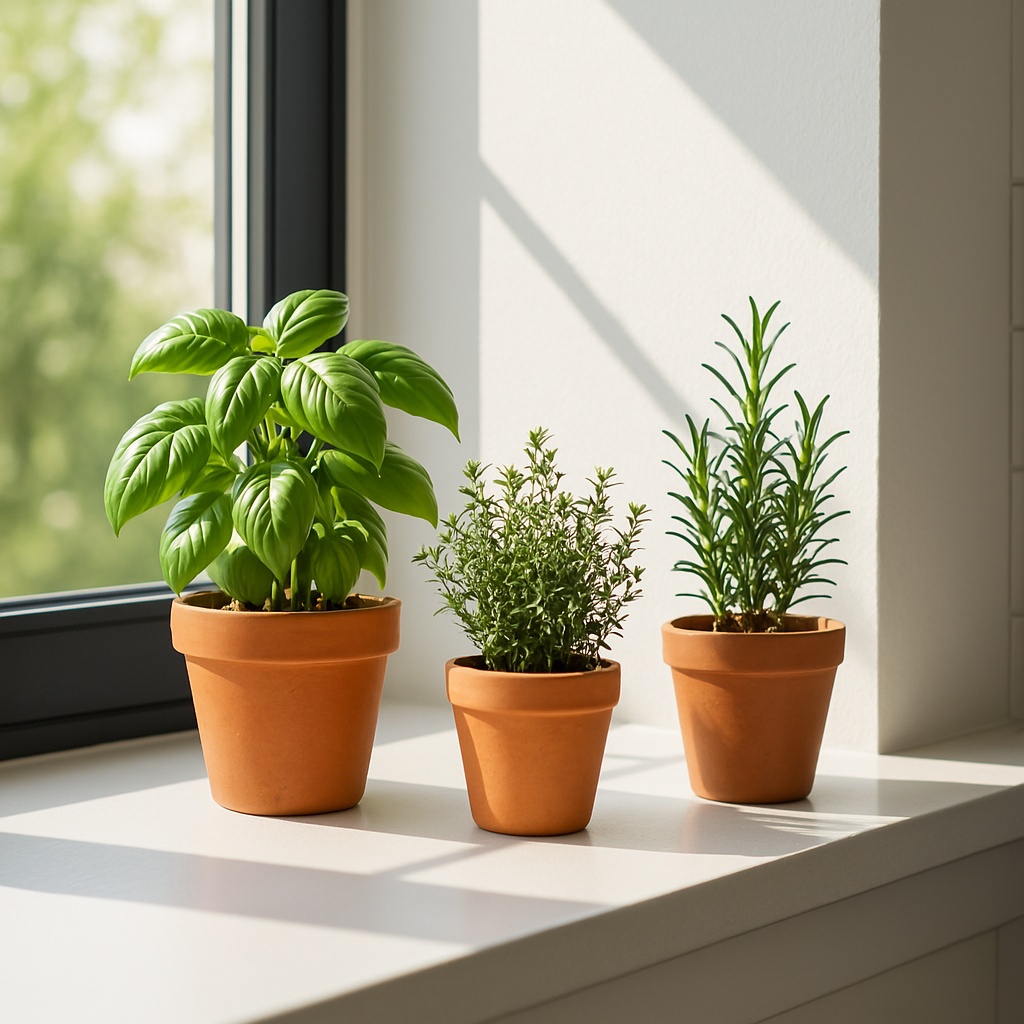
A bright, minimalist window sill in a contemporary kitchen featuring three small terracotta pots of varying heights with culinary herbs (basil, thyme, and rosemary). The window board is painted in a clean white, contrasting with the matte black window frame. Natural light creates subtle shadows across the scene, highlighting the texture of both the pots and the smooth window board.

Planning Your Space

Consider light conditions, window architecture, and room function before arranging items. Kitchen sills work well with practical elements, while living rooms allow for more decorative options.

Window board depth affects your styling options. Standard boards range from 150mm to 400mm – deeper boards accommodate more items while shallower ones require restraint.
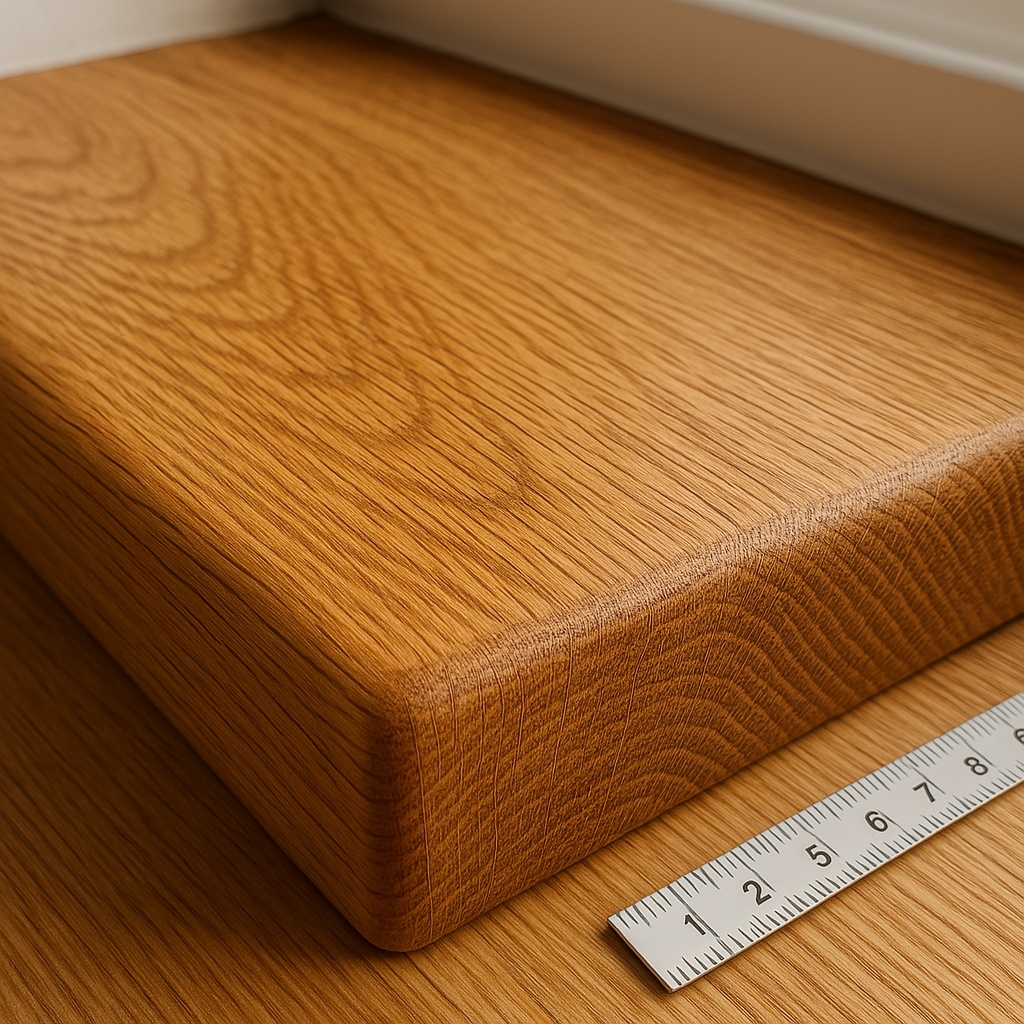
A detail shot of a deep oak window board (approximately 250mm depth) with a natural oil finish. The image focuses on the grain pattern and edge profile, demonstrating the quality of the material as the foundation for any window styling. A small ruler or measuring tape is visible for scale reference.

Kitchen Windows

Kitchen window sills often serve dual purposes. A small herb garden provides both visual interest and practical use.

For kitchen window styling:

  • Choose containers that match your kitchen materials
  • Arrange herbs by height, taller varieties at the sides
  • Include small vessels for kitchen essentials
  • Allow space between plants for growth
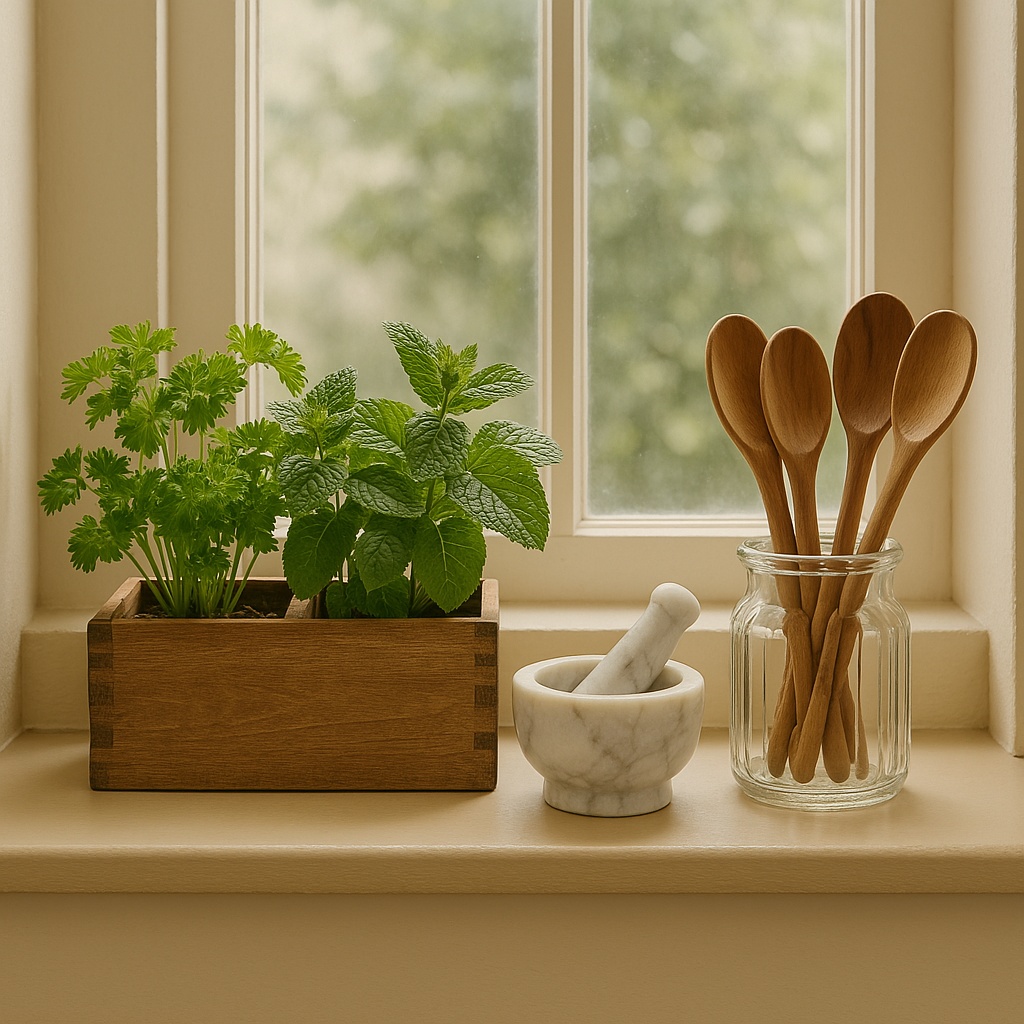
A kitchen window sill arrangement showing a functional layout with three elements: a wooden herb planter with compartments holding parsley and mint, a small marble mortar and pestle, and a vintage-inspired glass container with wooden spoons. The window board is painted in a warm neutral tone, complementing the wooden and marble elements.

Living Room Windows

Living room windows offer space for more decorative arrangements that can change seasonally.
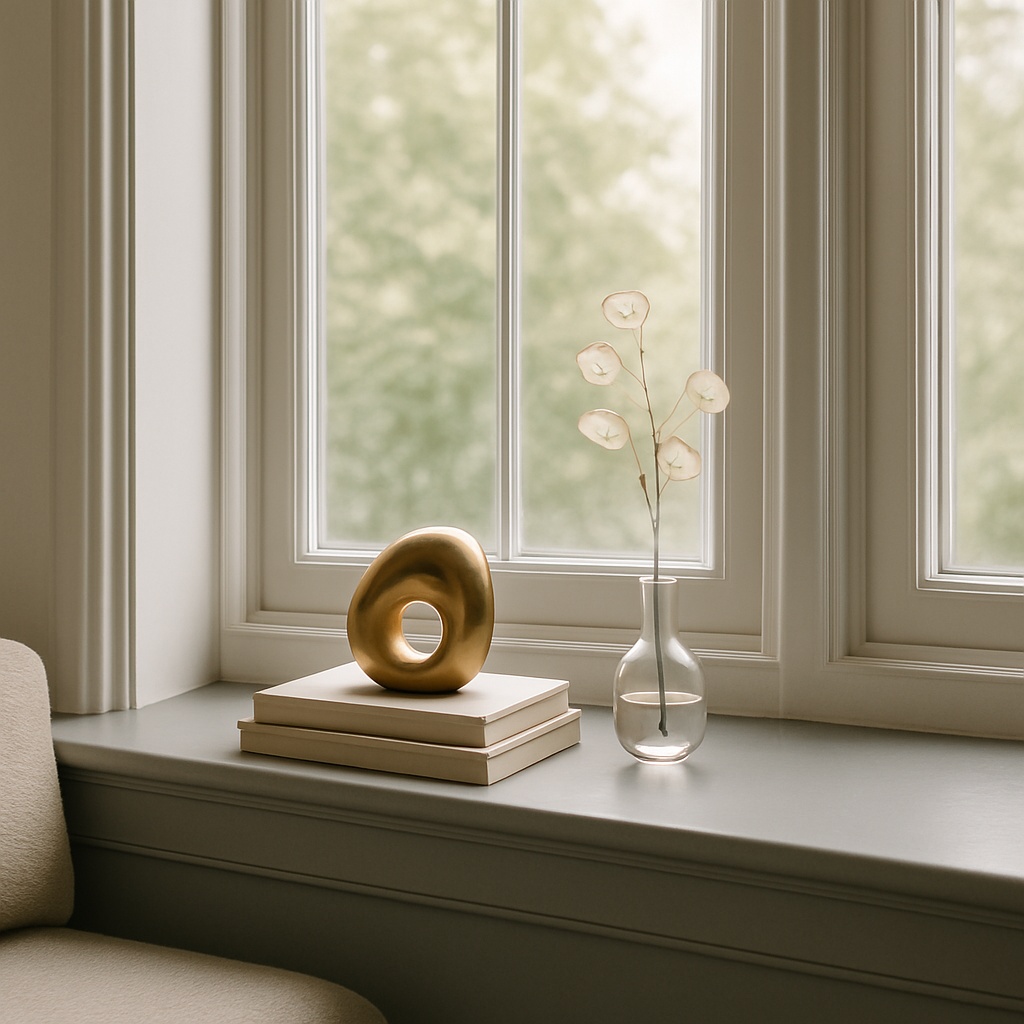
A living room bay window sill featuring a carefully composed arrangement of objects with varying heights. The window board is painted in a soft grey. The styling includes three elements: a stack of two art books with neutral covers, a medium-sized brass sculptural object with an abstract form, and a small bud vase with a single stem of dried lunaria. The composition uses negative space intentionally.

For living spaces, maintain visual interest without creating clutter. Space between objects provides visual breathing room – particularly important in smaller rooms or where the window offers a notable view.

Reading Nooks

Window seats benefit from functional arrangements that support their purpose.
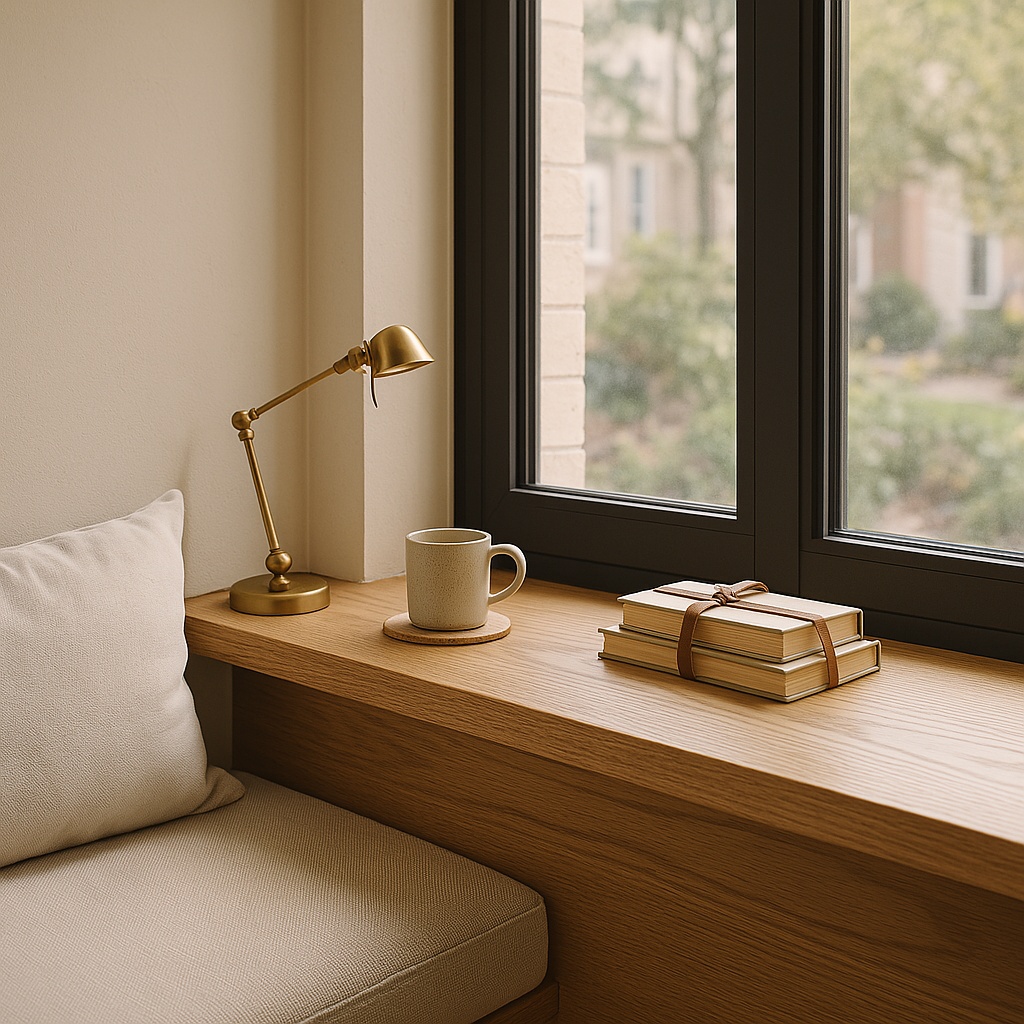
A reading nook with a small reading lamp, books and cup of coffee

Materials

Your window board establishes the foundation for any styling. Painted MDF offers versatility, while natural wood adds warmth.

Options include:

  • Painted MDF for contemporary settings
  • Oak for traditional or warm modern spaces
  • Walnut for rich interiors
  • Marble for bathrooms
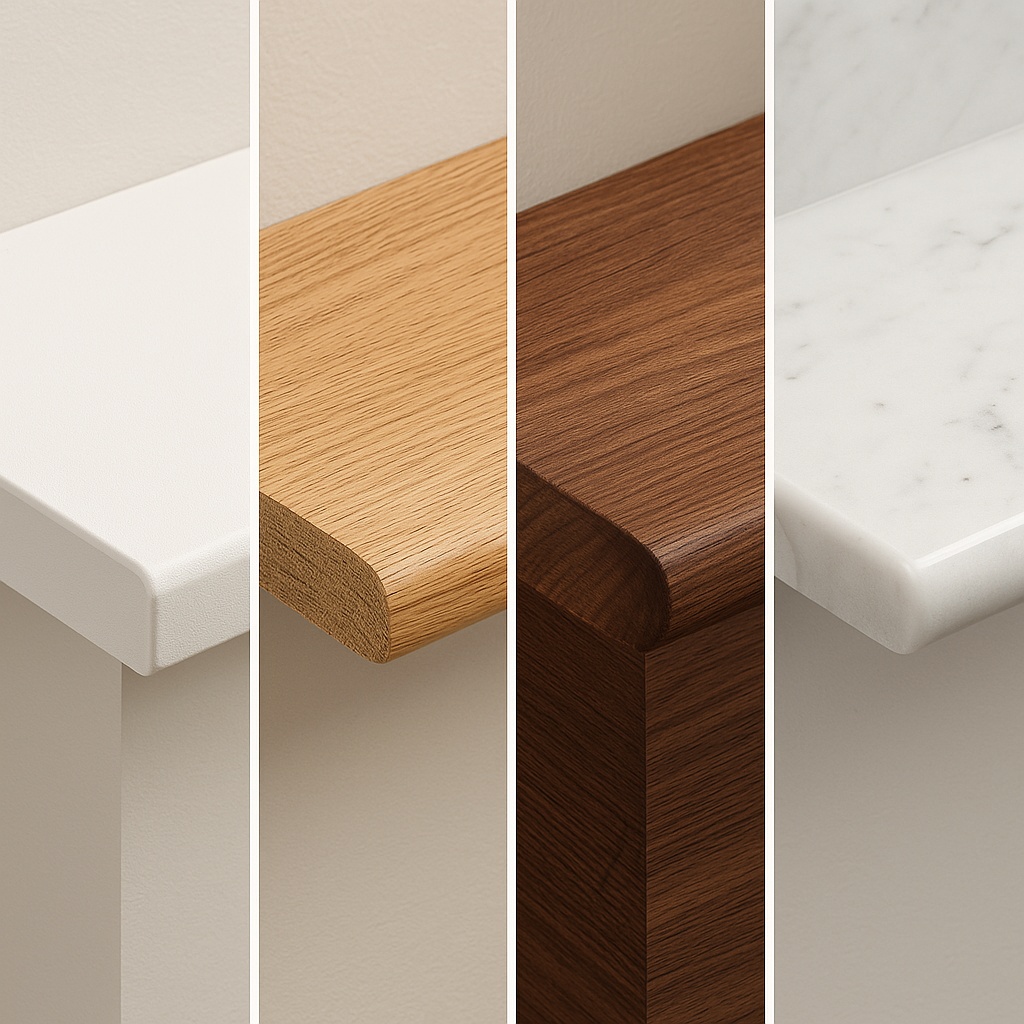
A comparative image showing four different window board materials side by side: painted white MDF with a square edge profile, natural oak with a bullnose edge, walnut with a chamfered edge, and white marble with a half bullnose edge. Each section displays approximately 200mm of the material with consistent lighting to show texture and colour differences.

Bathroom Windows

Bathroom windows present unique challenges due to humidity and privacy. Select items that withstand moisture.
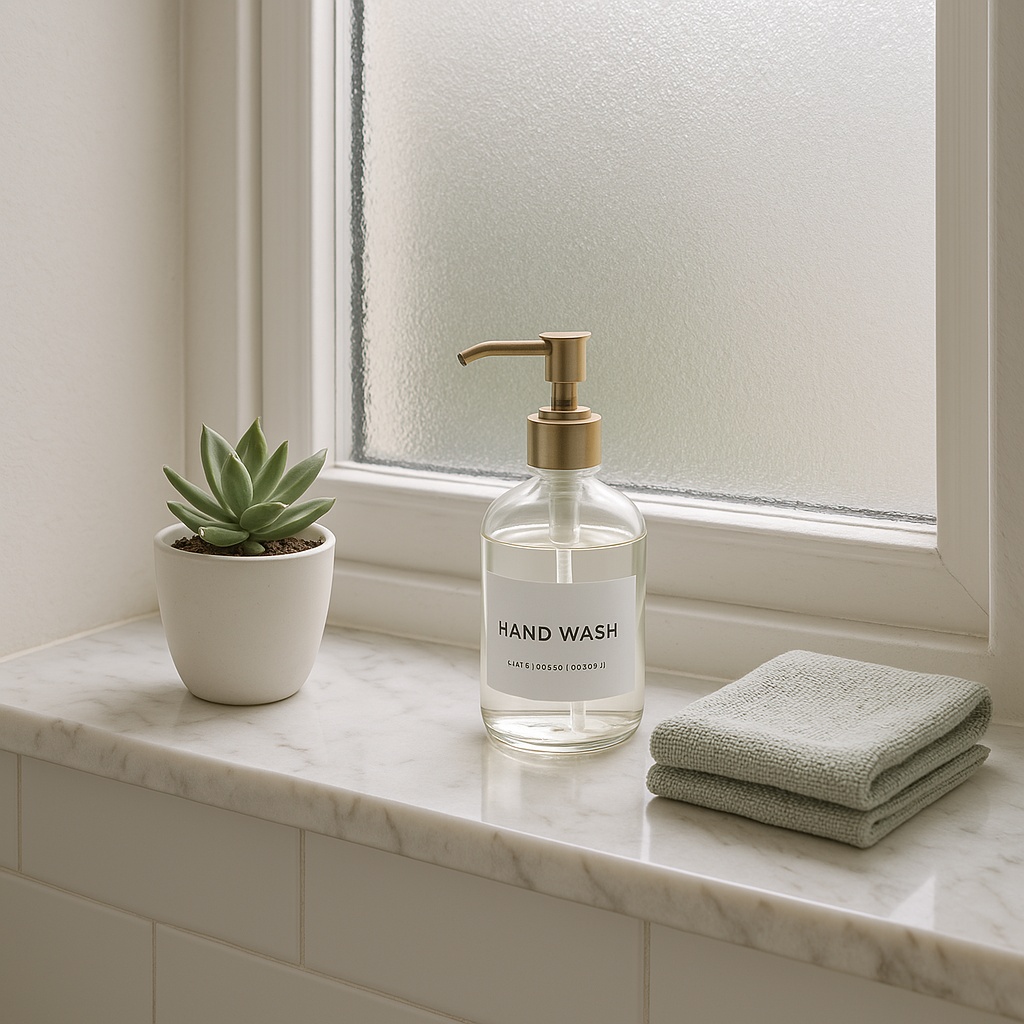
A bathroom window sill made from white marble with subtle grey veining. The styling includes a small potted succulent in a white ceramic pot, a clear glass bottle of hand wash with a brass pump, and a small folded hand towel in a pale sage green. The window has frosted glass for privacy, creating diffused light across the arrangement.

For bathroom window styling:

  • Use moisture-resistant materials (glass, ceramics, marble)
  • Keep styling minimal for easy cleaning
  • Consider scent elements
  • Choose plants that thrive in humidity

Seasonal Changes

Adjust window sill styling seasonally to maintain interest.
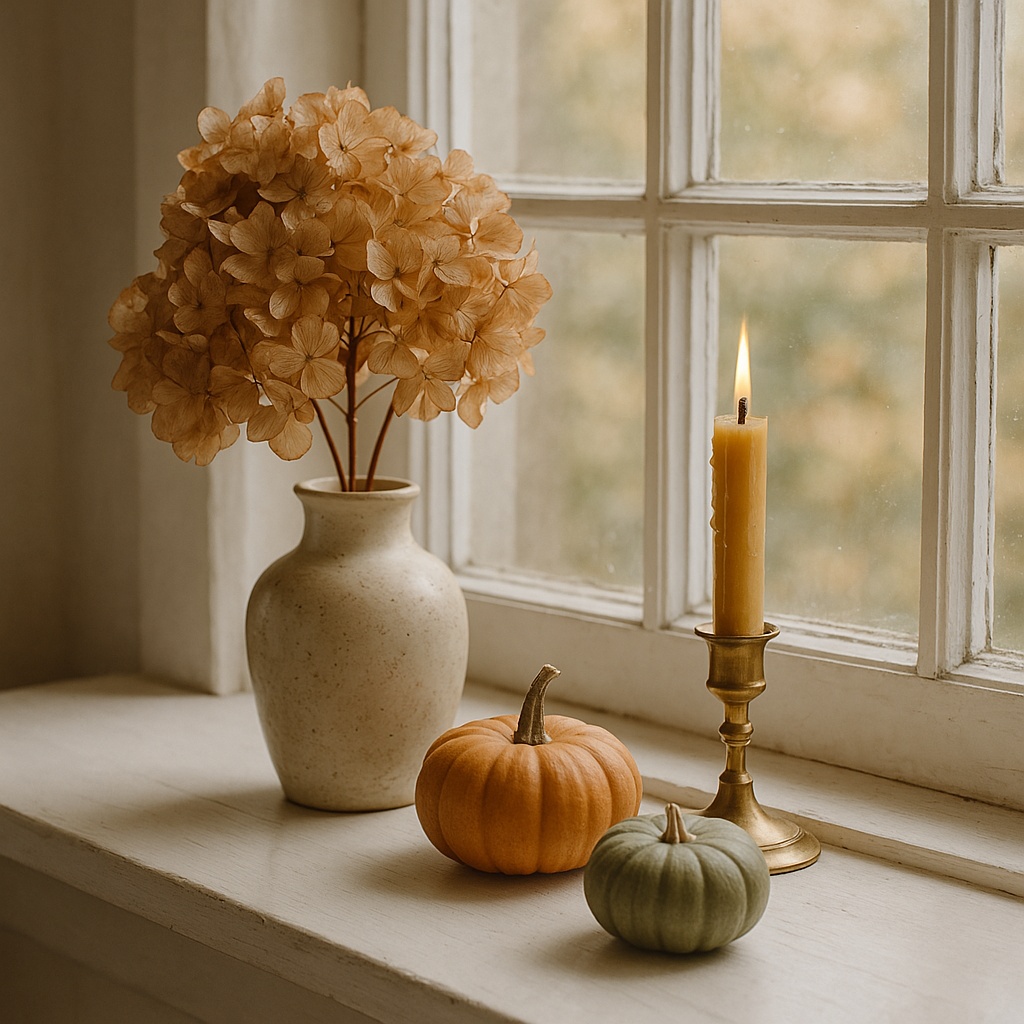
A window sill styled for autumn, featuring a white painted window board with a collection of seasonal elements: a small arrangement of dried hydrangeas in a ceramic vase, two small heirloom pumpkins in muted orange and green tones, and a brass candleholder with a partially burned beeswax taper candle. The styling demonstrates subtle seasonal adaptation.

Children’s Rooms

In children’s rooms, window sills can display rotating collections while maintaining order.

Practical Considerations

Consider these practical aspects when styling window sills:

  • Ensure arrangements don’t block window operation
  • Consider direct sunlight effects on displayed objects
  • Allow space for condensation during cold weather
  • Select appropriate items based on window height
  • Choose weights suitable for your window board
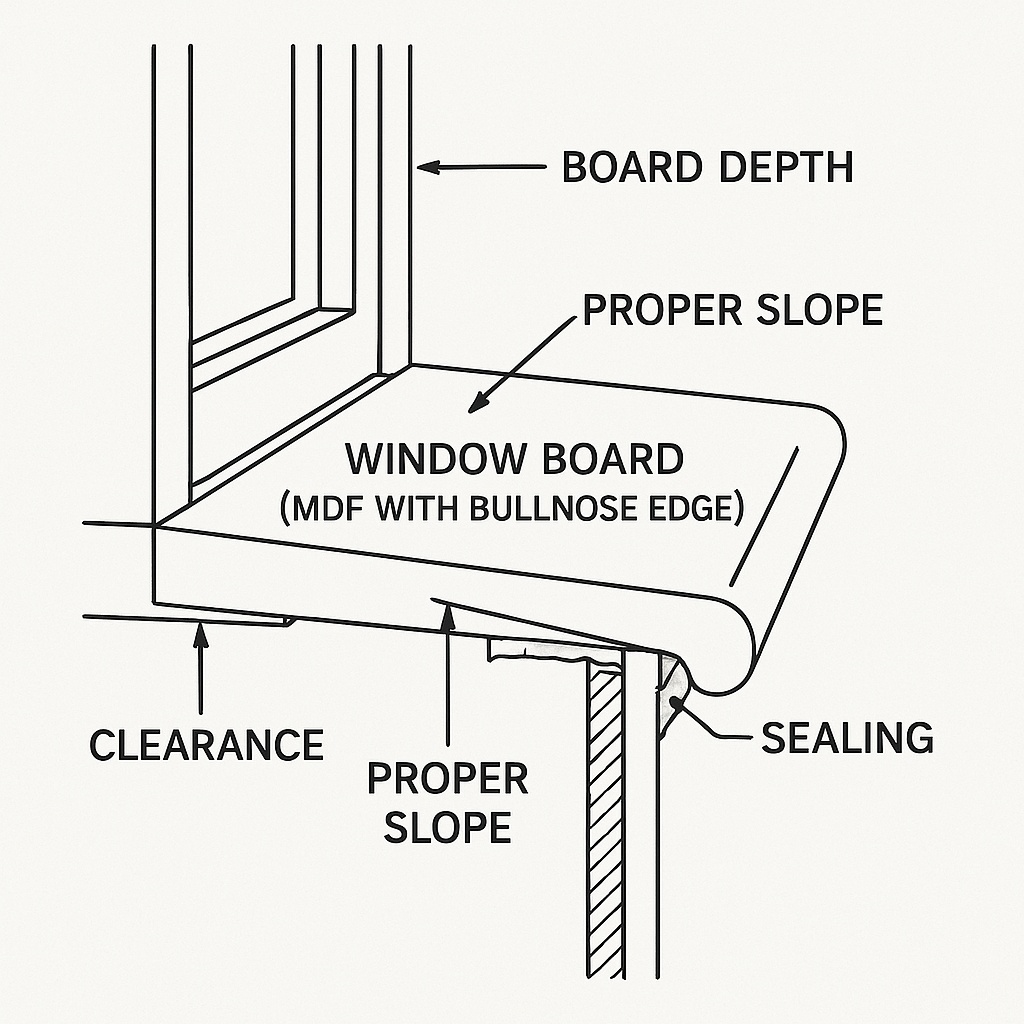
A technical illustration showing a cross-section of a window sill with a properly installed window board (MDF with a bullnose edge). The image highlights key elements: the board depth extending beyond the window frame, the proper slope for water runoff, the sealing between wall and board, and the clearance needed for window operation. This diagram shows the technical foundation that supports proper styling

Quality Foundations

Quality window boards should:

  • Extend beyond your window reveal by at least 30mm
  • Include a slight forward slope to prevent water pooling
  • Feature a drip groove along the underside front edge
  • Be properly sealed at all edges

Our window boards in MDF, oak, and other materials provide the proper foundation for your styling – properly installed, they offer long-term service while enhancing your interior architecture.